
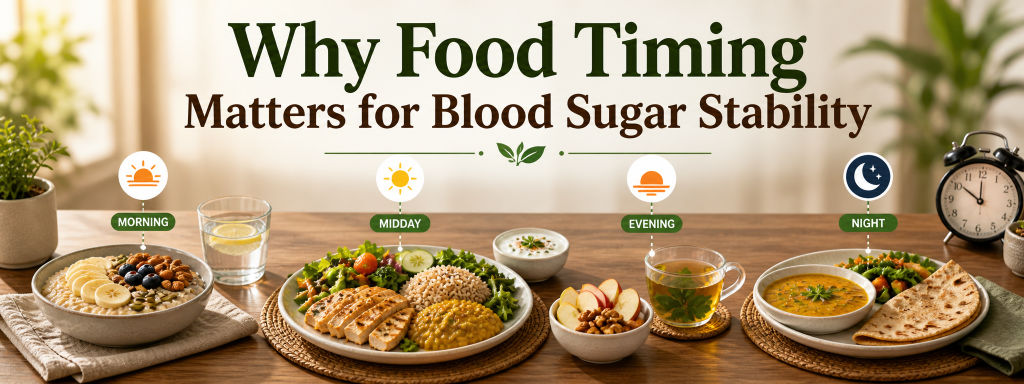
Most people focus heavily on what they eat, but very few truly understand why food timing matters for blood sugar stability. In everyday life, when you eat often has just as much impact as what you eat—affecting energy levels, digestion, cravings, and overall metabolic balance. Many individuals eat breakfast at random times, delay lunch due to work, snack late at night, or skip meals entirely. While these habits may seem normal, the body experiences them as constant disruption. Ayurveda has always emphasized the importance of rhythm, as the digestive system works best when it can predict nourishment consistently. This is exactly why food timing matters for blood sugar stability, helping explain why so many people feel tired, heavy, hungry, or mentally exhausted even when they believe they are eating “healthy.” To understand this connection more deeply, you can explore Understanding Diabetes from an Ayurvedic Perspective.
Quick Answer: Why Is Food Timing Important?
The body follows an internal metabolic clock.
When meals happen at irregular times, digestion becomes less efficient, energy fluctuates, cravings increase, and metabolic balance weakens over time.
Consistent meal timing helps:
- support digestion,
- regulate appetite,
- improve energy stability,
- and reduce unnecessary metabolic stress.
Ayurveda views meal rhythm as one of the foundations of long-term wellness.
The Body Likes Predictability
Think about how the body works naturally.
You usually feel hungry around similar times every day. Sleep becomes easier when bedtime is consistent. Energy feels steadier when routine is structured.
Digestion works the same way.
When food arrives unpredictably, the digestive system struggles to prepare properly. Hormonal rhythm becomes irregular, appetite signals become confusing, and metabolism becomes less efficient.
This is one reason why people often experience:
- afternoon energy crashes,
- late-night cravings,
- or feeling hungry and tired at the same time.
This is closely linked to maintaining a Daily Routine for Better Metabolic Balance, which supports overall stability in the body.
The Common “Busy Lifestyle” Eating Pattern
A very common modern routine looks like this:
- coffee instead of breakfast,
- late lunch,
- snacks during stress,
- heavy dinner late at night.
People follow this pattern for years without realizing how deeply it affects metabolism.
At first, the body adapts.Later, signs begin appearing:
- low morning energy,
- poor digestion,
- inconsistent appetite,
- disturbed sleep,
- and fluctuating energy after meals.
Ayurveda sees these patterns as signals that daily rhythm has lost balance. Many of these patterns are explained in detail in Lifestyle Habits That Affect Blood Sugar Balance, where daily behaviors play a key role.
Why Skipping Meals Creates Internal Stress?
Many people skip meals thinking it helps “control” metabolism.
In reality, irregular eating often increases stress on the body.
Long gaps between meals may lead to:
- stronger cravings,
- overeating later,
- unstable energy,
- and poor food choices.
The body begins functioning in survival mode rather than stable rhythm.
Ayurveda encourages mindful regular eating rather than extremes.
Late-Night Eating Is One of the Biggest Problems
One of the most harmful modern eating habits is heavy late-night meals.
During evening hours, digestion naturally slows. The body begins preparing for repair and rest.
Heavy food late at night creates unnecessary digestive burden.
Many people notice:
- heaviness in the morning,
- disturbed sleep,
- bloating,
- or reduced morning appetite after late dinners.
This pattern quietly affects long-term metabolic stability.
Real-Life Scenario: The “Healthy Eater” Who Still Feels Unwell
Some people eat nutritious food but still feel constantly tired or unbalanced.
Why?
Because healthy food cannot fully compensate for chaotic timing.
For example:
A person may eat salads, smoothies, and balanced meals — but:
- breakfast changes daily,
- lunch is delayed,
- dinner happens after 10 PM,
- and stress eating continues.
The issue is not only food quality. The issue is rhythm. Ayurveda focuses on both nourishment and timing together.
Digestion Works Like a Daily Cycle
Ayurveda explains that digestion is strongest during the middle of the day.
This is why lunch is traditionally considered the most important meal.
Many modern lifestyles reverse this pattern:
- light lunch,
- heavy dinner.
Over time, this weakens digestion and creates metabolic strain.
A more balanced approach often includes:
- steady breakfast,
- proper lunch,
- lighter evening meals.
This supports more natural digestive flow.
Emotional Eating Disrupts Timing Further
Stress changes eating behavior significantly.
Many people eat:
- too quickly,
- too late,
- or emotionally rather than physically.
This disconnects appetite from actual body needs.
Ayurveda encourages mindful eating because digestion begins not only in the stomach but also in the nervous system.
Calm eating improves processing. Rushed eating increases imbalance.
Common Food Timing Mistakes People Ignore
Some habits seem harmless but quietly affect blood sugar stability:
- skipping breakfast regularly,
- eating meals while working,
- random snacking,
- sleeping immediately after dinner,
- and inconsistent weekend eating schedules.
These repeated disruptions create metabolic confusion over time. The body functions best with consistency.
Why Extreme Diet Trends Often Fail?
Many popular diet trends focus only on restriction.
But severe fasting, aggressive dieting, or irregular eating plans may worsen imbalance for some individuals.
People often experience:
- cravings,
- burnout,
- irritability,
- or loss of consistency.
Ayurveda generally supports moderation and sustainable rhythm instead of extreme short-term approaches.
Practical Guidance for Better Food Timing
Improving food timing does not require perfection.
Simple improvements often help:
- eating meals at similar times daily,
- reducing late-night eating,
- eating without distraction,
- allowing proper digestion between meals,
- and maintaining consistency even on busy days.
Small predictable habits create stronger long-term stability than dramatic temporary changes.
Final Verdict
Understanding why food timing matters for blood sugar stability changes the way we think about health.
Metabolic balance is not influenced only by food choices but also by rhythm, consistency, and digestion. Ayurveda teaches that the body functions best when meals support natural internal timing instead of fighting against it. Balanced eating patterns create steadier energy, calmer digestion, and healthier long-term wellness. True metabolic balance is built quietly through routine.
CTA
Sometimes improving health begins not with dramatic diets, but with understanding how your daily routine affects your body.
If you want personalized Ayurvedic guidance for lifestyle balance and digestive wellness, explore a consultation with Dr. Arjun Bawa at Ayuvacare.