
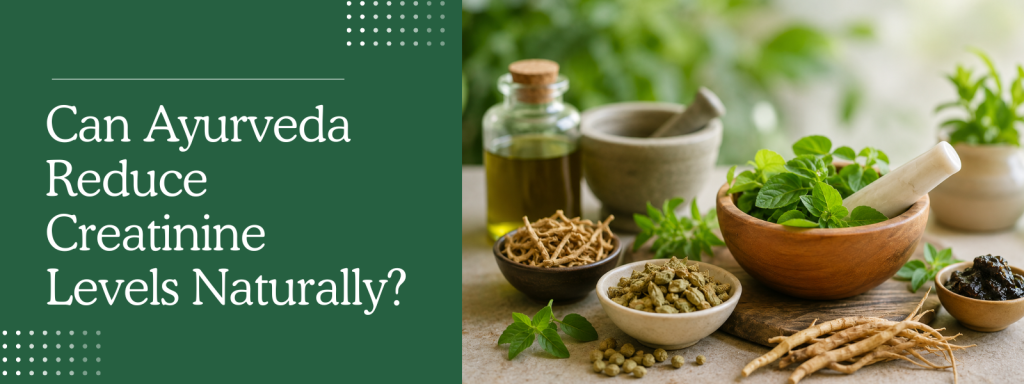
If your Creatinine levels are increasing and dialysis has already been discussed, it is natural to start searching for safer, long-term solutions. Many patients across Amritsar, Ludhiana, Jalandhar, and other parts of Punjab visit Ayuvacare looking for an effective ayurvedic treatment for high creatinine that supports kidney health naturally instead of focusing only on temporary management.
In many cases, Ayurveda can help support kidney function, stabilize rising Creatinine levels, and improve overall quality of life — especially when treatment begins early and the root cause of kidney damage is addressed properly. In this article, Dr. Arjun Bawa explains how ayurvedic treatment for high creatinine works, what causes Creatinine levels to rise, and how Ayurvedic herbs, diet, and lifestyle management approach kidney care differently from conventional treatment. Patients looking for the best Ayurvedic Doctor in Amritsar often visit Ayuvacare for personalized kidney care and long-term Creatinine management support.
What Is Creatinine and Why Does It Rise?
Creatinine is a waste product produced naturally by your muscles during normal activity. Healthy kidneys filter it out of your blood and remove it through urine. When kidneys are damaged or weakened, they lose their filtering ability — and Creatinine begins to accumulate in the blood. One of the leading causes of high Creatinine is uncontrolled Diabetes damaging kidney tissues over time and reducing filtration efficiency.
Normal Creatinine levels are:
- Men: 0.7 to 1.2 mg/dL
- Women: 0.5 to 1.1 mg/dL
When Creatinine goes above these ranges consistently, it indicates that kidney function is declining. The higher the number — the more the kidneys are struggling.
Common reasons Creatinine rises:
- Chronic Kidney Disease (CKD)
- Uncontrolled Diabetes damaging kidney tissues
- High blood pressure affecting kidney blood flow
- Prolonged use of certain medicines including painkillers
- Recurrent kidney infections
- Dehydration over long periods
The important thing to understand is this — Creatinine is a symptom, not the disease itself. Bringing Creatinine down requires treating the underlying damage, not just the number.
What Does Conventional Medicine Do for High Creatinine?
Conventional medicine typically focuses on:
- Managing blood pressure and blood sugar
- Restricting protein and potassium in diet
- Prescribing medicines to slow CKD progression
- Monitoring kidney function regularly
- Recommending dialysis when kidneys fail significantly
These are important and necessary steps. However, conventional treatment largely manages the condition rather than reversing the underlying damage. Most patients are told — ‘Your kidneys will keep declining. We are trying to slow it down.’
This is where many patients begin exploring Ayurveda — not to replace their existing treatment, but to find something that works on the root level.
How Does Ayurveda Understand High Creatinine?
In Ayurveda, Chronic Kidney Disease and rising Creatinine are understood as a deterioration of the Mutravahasrotas — the channels responsible for urine formation and excretion — combined with accumulation of Ama (metabolic toxins) in the kidney tissues. At Ayuvacare, the approach to Ayurvedic treatment for Kidney Disease focuses on improving kidney function, reducing toxin accumulation, and supporting long-term renal health naturally.
The primary Doshas involved are:
- Vata imbalance — causes dryness, degeneration, and reduced blood flow to kidney tissues. This is the dominant factor in most CKD cases.
- Kapha imbalance — causes obstruction, fluid retention, and reduced filtration efficiency.
- Pitta imbalance — causes inflammation and infection in kidney channels.
Ayurvedic treatment for high Creatinine works by:
- Reducing Ama accumulation in kidney tissues
- Restoring healthy Vata flow to improve blood circulation to kidneys
- Strengthening the Mutravahasrotas to improve filtration
- Removing inflammatory toxins through specific herbs and therapies
- Supporting the body’s natural tissue repair processes
The goal is not to chase the Creatinine number — the goal is to restore kidney tissue health so the kidneys can filter more effectively on their own.
Which Ayurvedic Herbs Help Reduce Creatinine?
Several Ayurvedic herbs have well-documented nephroprotective properties — meaning they protect and support kidney function. At Ayuvacare, Dr. Arjun Bawa prescribes formulations based on each patient’s specific condition, Prakriti, and current kidney function.
Punarnava (Boerhavia diffusa)
One of the most important herbs for kidney health in Ayurveda. Punarnava has diuretic properties, reduces fluid retention, supports healthy urine output, and helps clear toxins from kidney channels. It is particularly useful in reducing swelling in CKD patients.
Gokshura (Tribulus terrestris)
Gokshura is a well-known herb for urinary and kidney health. It supports healthy filtration, reduces protein loss through urine (proteinuria), and helps maintain kidney tissue integrity.
Varuna (Crataeva nurvala)
Varuna is used to clear obstructions in the urinary channels and reduce inflammation in kidney tissues. It is particularly effective in cases where kidney damage is combined with urinary tract issues.
Chandraprabha Vati
A classical Ayurvedic formulation used to support overall kidney and urinary system health. It helps reduce Ama accumulation and supports healthy metabolic function.
Shilajit
A mineral-rich Ayurvedic substance known for its powerful rejuvenating and anti-inflammatory properties. It supports kidney tissue repair and improves overall energy and metabolic function in CKD patients.
Important Note: These herbs should never be self-prescribed. In kidney patients, the wrong herb or wrong dosage can worsen kidney function. Always consult a qualified Ayurvedic doctor before taking any herb for Creatinine management.
What Results Can Patients Realistically Expect?
This is the most important question — and Dr. Bawa believes in giving patients a completely honest answer.
Ayurvedic treatment for high Creatinine is not a miracle cure. It is a systematic, gradual process that works best when started early and followed consistently.
Creatinine between 1.5 and 3.0 mg/dL:
Most patients in this range see measurable improvement in Creatinine levels within 3 to 6 months of consistent treatment. Many patients have been able to stabilize their levels and prevent further progression.
Creatinine between 3.0 and 5.0 mg/dL:
Improvement is possible but slower. The focus at this stage is stabilization — stopping the rise — before reduction becomes the goal. Many patients in this range have avoided dialysis for years with consistent Ayurvedic support.
Creatinine above 5.0 mg/dL or end-stage CKD:
Ayurvedic treatment at this stage is supportive rather than curative. It helps manage symptoms, improve quality of life, and reduce the frequency of dialysis in some cases. It cannot replace dialysis at this stage.
Key factors that affect results:
- How early treatment is started
- Whether the patient follows the prescribed diet strictly
- Whether Diabetes and blood pressure are well controlled
- How consistently the patient takes Ayurvedic medicines
- Whether the patient stops taking medicines that damage kidneys — especially painkillers
The Role of Diet in Creatinine Management
Ayurveda places enormous importance on diet — especially for kidney patients. At Ayuvacare, every patient receives a personalized diet plan as part of their treatment.
Foods to reduce or avoid:
- High protein foods — excess red meat, eggs, heavy dairy
- High potassium foods — bananas, potatoes, tomatoes (in advanced CKD)
- High phosphorus foods — processed foods, cola drinks
- Excess salt — worsens fluid retention and blood pressure
- Packaged and preserved foods — contain kidney-damaging additives
- Painkillers and NSAIDs — extremely damaging to kidney tissue
Foods that support kidney health:
- Tender coconut water — natural diuretic, hydrating
- Bottle gourd (lauki) — cooling, supports kidney function
- Coriander water — gentle kidney cleanser
- Punarnava kadha — herbal decoction for kidney support
- Warm water throughout the day — essential for kidney flushing
Important: Diet for kidney patients must be customized based on their specific Creatinine level, potassium level, and stage of CKD. What is safe at Creatinine 2.0 may not be safe at Creatinine 5.0. Never follow a generic kidney diet — always get a personalized plan from your doctor.
Can You Continue Allopathic Medicines During Ayurvedic Treatment?
Yes — and this is critical.
You should never stop your prescribed allopathic medicines without your doctor’s guidance. Medicines for blood pressure, Diabetes, and kidney support must continue as prescribed.
At Ayuvacare, Dr. Arjun Bawa works alongside your existing treatment. As your Creatinine improves and your reports show progress — the decision to gradually reduce allopathic medication is made carefully and always in coordination with your physician.
Ayurveda and modern medicine are not enemies. In chronic kidney disease, the best outcomes come from combining both intelligently.
When Should You Consult an Ayurvedic Doctor for High Creatinine?
The earlier the better — this is the single most important piece of advice.
Many patients come to Ayuvacare when their Creatinine is already above 4.0 or 5.0 and dialysis has been recommended. At that stage, Ayurvedic treatment can still help — but the results are more limited.
If your Creatinine has crossed 1.5 mg/dL and is showing a rising trend — that is the right time to consult. Do not wait for it to reach 3.0 or 4.0 before exploring Ayurvedic support.
Early intervention gives Ayurvedic treatment the best chance to:
- Slow or halt the progression of kidney damage
- Reduce Creatinine meaningfully
- Help you avoid or delay dialysis
- Improve your energy, appetite, and quality of life
Why Choose Ayuvacare for Creatinine and Kidney Treatment in Amritsar?
- All medicines are 100% free from heavy metals, Bhasma, and nephrotoxic herbs — safe for kidney patients
- Treatment decisions are backed by your actual blood reports — Creatinine, Urea, GFR, Electrolytes
- Every patient receives a personalized diet and lifestyle plan at no extra cost
- Progress is tracked through regular blood reports — you see real numbers improving
- 12+ years of clinical experience in chronic kidney disease management
- Online consultations available for patients from Ludhiana, Jalandhar, Delhi and abroad
Conclusion
High Creatinine is serious — but it is not always a one-way road to dialysis.
With the right Ayurvedic treatment, consistent diet management, and regular monitoring, many patients have been able to stabilize their kidney function, reduce their Creatinine levels, and live a healthy, active life without dialysis.
The key is to start early, stay consistent, and work with a qualified Ayurvedic doctor who tracks your progress through real clinical data — not just how you feel.
If your Creatinine is rising and you are looking for a natural, safe, and medically sound approach — Dr. Arjun Bawa at Ayuvacare, Amritsar is here to help. If you want personalized guidance for rising Creatinine levels, you can Book a consultation with Dr. Arjun Bawa at Ayuvacare, Amritsar.
Book a Consultation with Dr. Arjun Bawa
Creatinine rising? Get a personalized Ayurvedic treatment plan based on your actual reports.
📍 13-B, Kashmir Avenue, Batala Road, Amritsar
📞 +91 83609 86081 | +91 78885 79180
🌐 ayuvacare.com/consultation | In-clinic and online consultations available