
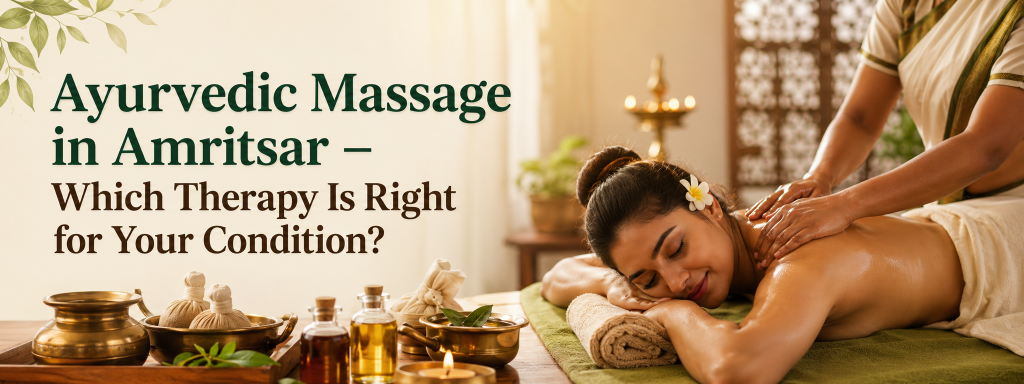
You have been carrying it for months. The tension in your shoulders that never fully releases. The fatigue that sleep does not fix. The joint stiffness that gets worse every morning. The stress that has become so constant you have forgotten what it feels like to be without it.
Modern medicine gives you painkillers for the pain, sleeping pills for the insomnia, and antidepressants for the stress. Each medicine targets one symptom. None of them address why your body reached this state in the first place.
Ayurvedic Massage in Amritsar offers a different approach. Instead of targeting individual symptoms separately, Ayurvedic massage therapy works on the body as a whole — releasing accumulated toxins from deep tissues, restoring circulation, calming the nervous system, and correcting the underlying Dosha imbalances that may be driving multiple symptoms at the same time.
At Bawa’s Centre of Modern Ayurveda — Amritsar’s trusted Ayurvedic clinic — Dr. Arjun Bawa offers a complete range of Ayurvedic massage and Panchakarma therapies designed for both wellness maintenance and chronic disease management.
This guide explains each therapy available at our Panchakarma centre in Amritsar, what it treats, and how to know which one is right for your condition. As a leading Ayurvedic clinic, we combine traditional therapies with personalized treatment approaches for long-term wellness.
Why Ayurvedic Massage Is Different from Regular Massage?
Most people think of massage as a relaxation service — something you do at a spa to unwind after a stressful week. Ayurvedic massage is a medical therapeutic intervention with completely different goals, techniques, and outcomes.
Here is what makes Ayurvedic massage fundamentally different:
The oils are medicated. Every oil used in Ayurvedic massage is infused with specific herbs chosen for your condition and Dosha. The oil itself is part of the treatment — not just a lubricant for the hands. Warm medicated oil penetrates deep into skin and muscle tissue, carries herbal compounds into the bloodstream, and begins working on organ systems from the outside in.
The strokes are directional. Ayurvedic massage strokes follow the direction of lymphatic drainage and blood flow — moving toxins toward elimination channels. This is not random pressure — it is a systematic process of moving Ama from deep tissues toward the gut and elimination pathways.
The sequence matters. Ayurvedic massage is typically part of a larger Panchakarma protocol. Abhyanga is followed by Swedana. Shirodhara is preceded by a scalp massage. The sequence ensures maximum therapeutic effect.
The therapist is trained clinically. At Bawa’s Centre, all therapies are performed by trained therapists under Dr. Arjun Bawa’s personal supervision — not by generic spa staff.
Ayurvedic Massage Therapies Available at Our Panchakarma Centre in Amritsar
Abhyanga — Ayurvedic Massage in Amritsar for Stress and Joint Relief
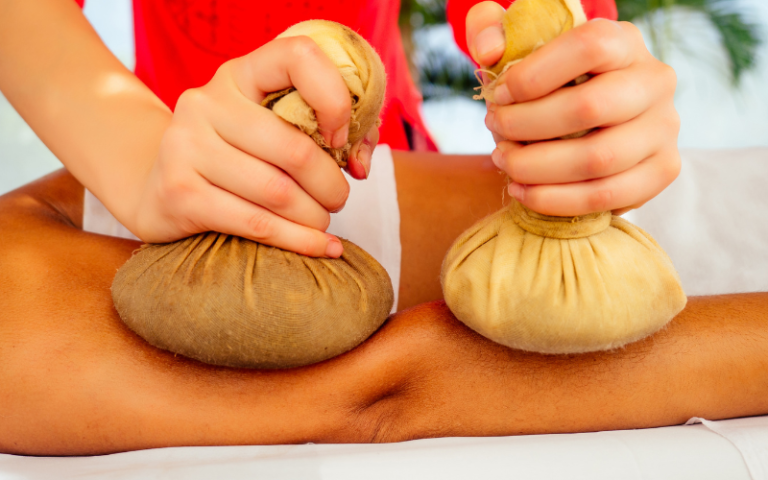
Abhyanga is the foundation of Ayurvedic body therapy. It involves the application of warm medicated oil to the entire body in synchronized, rhythmic strokes — typically performed by one or two therapists simultaneously.
The oil used is selected based on your Prakriti and current condition. Vata-dominant patients receive heavy, warming oils like Sesame or Dhanwantaram. Pitta-dominant patients receive cooling oils like Coconut or Chandanadi. Kapha-dominant patients receive lighter, stimulating oils like Mustard or Triphala oil.
What Abhyanga treats:
- Joint pain and stiffness
- Muscle tension and body aches
- Poor circulation and cold extremities
- Dry skin and premature aging
- Fatigue and low energy
- Anxiety and nervous system dysregulation
- As preparation for deeper Panchakarma procedures
Duration
45 to 60 minutes
Best for
Vata conditions, joint disease, stress, fatigue, general wellness maintenance
Shirodhara — Continuous Oil Flow Therapy
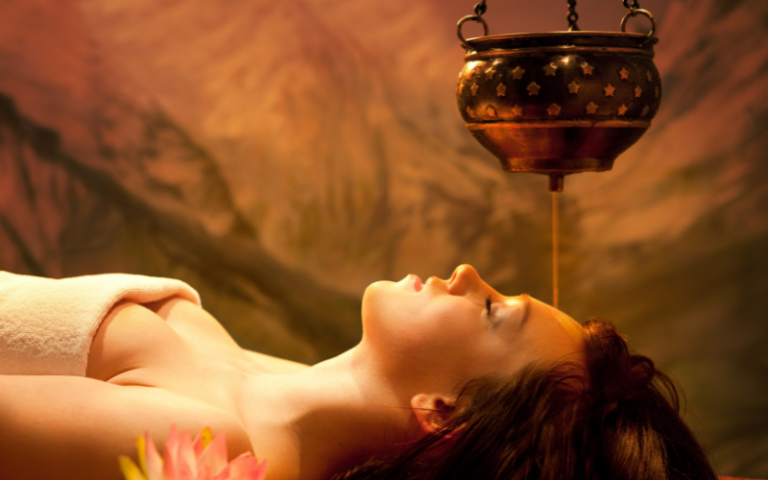
Shirodhara is one of the most iconic and deeply therapeutic Ayurvedic treatments. It involves a continuous, gentle stream of warm medicated oil poured onto the forehead — specifically the Ajna Chakra or third eye point — for 30 to 45 minutes.
The effect on the nervous system is profound. Within 10 to 15 minutes most patients enter a deeply relaxed state that is neither sleep nor wakefulness — a state of heightened awareness and complete physical calm that is virtually impossible to achieve through any other method. Many patients searching for Shirodhara near me choose personalized therapy plans based on their stress and neurological symptoms.
What Shirodhara treats:
- Chronic stress and anxiety
- Insomnia and disrupted sleep
- Migraines and chronic headaches
- Hypertension — high blood pressure
- Depression and emotional instability
- Mental fatigue and burnout
- Early cognitive decline
- Neurological conditions
Oils used
Sesame oil, Brahmi oil, Ksheerabala oil depending on condition
Duration
30 to 45 minutes — typically preceded by Abhyanga
Best for
Stress-related conditions, neurological disorders, insomnia, hypertension
Swedana — Herbal Steam Therapy
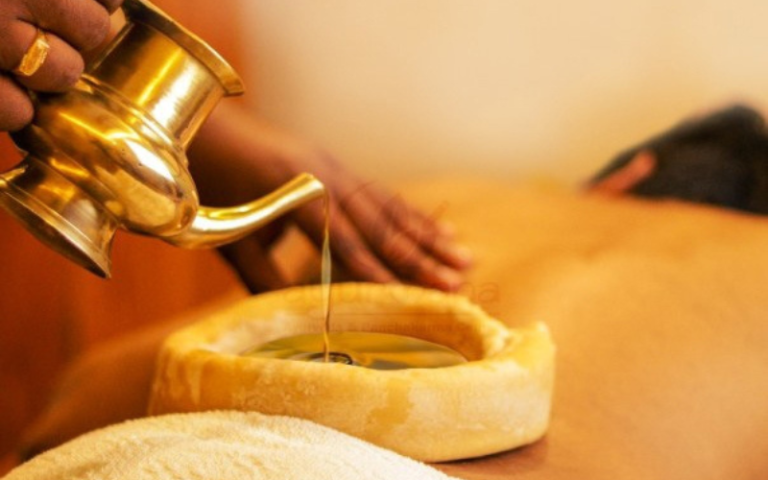
Swedana is an Ayurvedic steam therapy that involves exposing the body to medicated steam generated by boiling specific herbs in water. It is almost always performed after Abhyanga as part of the Panchakarma preparation sequence.
The mechanism is straightforward — heat opens skin pores, increases circulation, and causes the body to sweat. Ama and toxins that have been loosened from deep tissues by the Abhyanga oil treatment are then mobilized to the skin surface and eliminated through sweat.
What Swedana treats:
- Stiffness and heaviness in joints
- Respiratory congestion and chronic cold
- Metabolic sluggishness in Kapha conditions
- Toxin accumulation in deep tissues
- Obesity and water retention
- Preparation for Panchakarma procedures
Duration
15 to 30 minutes
Best for
Joint conditions, respiratory problems, toxin elimination, metabolic disorders
Udvartana — Herbal Powder Massage
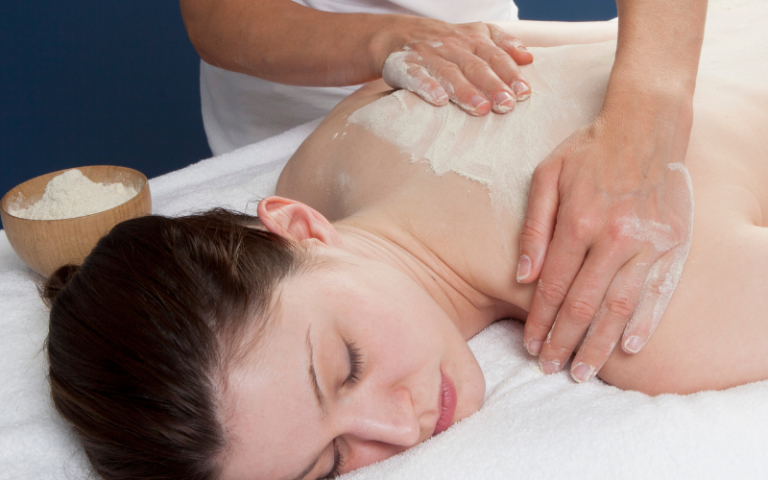
Udvartana is unique among Ayurvedic massage therapies because it uses a dry herbal powder or paste instead of oil. The powder is applied in vigorous upward strokes — creating friction that stimulates circulation, breaks down fat deposits, and scrubs the skin. Ayurvedic therapies can support Diabetes management through improved circulation and personalized treatment strategies.
What Udvartana treats:
- Obesity and excess weight
- Cellulite and subcutaneous fat deposits
- Poor skin tone and texture
- Kapha conditions — heaviness, sluggishness, fluid retention
- Diabetes management — improves peripheral circulation
- Lymphatic congestion
Duration
30 to 45 minutes
Best for
Weight management, skin conditions, Kapha disorders, Diabetes
Which Ayurvedic Massage in Amritsar Is Right for Your Condition?
The right therapy depends entirely on your condition, your Dosha constitution, and your current health situation. Here is a simple guide:
If you have chronic stress, anxiety, insomnia, or migraines:
Shirodhara is your primary therapy. Add Abhyanga as preparation.
If you have joint pain, body aches, or fatigue:
Abhyanga is your foundation therapy. Add Swedana for deeper relief.
If you are managing Diabetes, obesity, or metabolic sluggishness:
Udvartana combined with Abhyanga gives the best results.
If you are preparing for a full Panchakarma detox:
All four therapies are used in sequence — Abhyanga followed by Swedana as the standard preparation before the main Panchakarma procedures.
If you have Chronic Kidney Disease or Liver Cirrhosis:
Specific Panchakarma protocols are used as part of your overall treatment plan at Ayuvacare. These are medically supervised procedures designed to work alongside your Ayurvedic medicines and dietary protocol. Patients managing Chronic Kidney Disease often require carefully supervised Ayurvedic therapies alongside lifestyle and dietary support. People dealing with Liver Cirrhosis may require modified Panchakarma protocols depending on their overall health condition.
What Is Panchakarma and How Is It Different from Individual Massage Therapies?
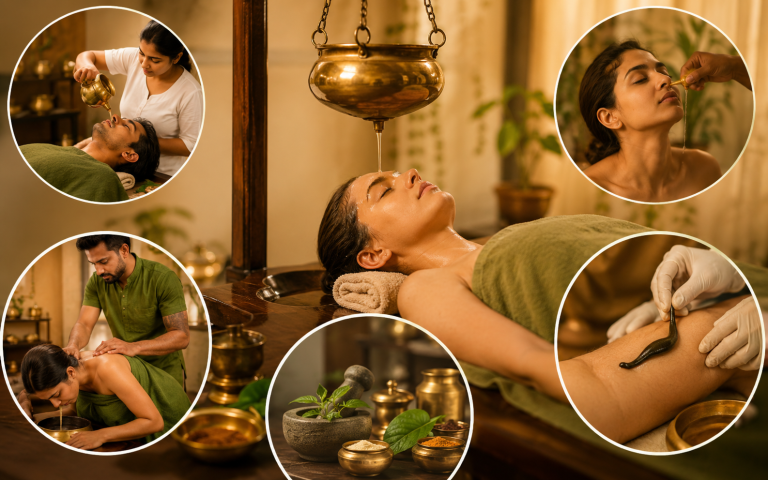
Panchakarma literally means five actions — referring to five classical purification procedures in Ayurveda: Vamana, Virechana, Basti, Nasya, and Raktamokshana. These are deep cleansing procedures that remove accumulated Ama from specific organ systems and channels.
The massage therapies described above — Abhyanga, Shirodhara, Swedana, Udvartana — are technically Purvakarma or preparatory procedures. They prepare the body for the main Panchakarma procedures by loosening and mobilizing deep-seated toxins.
At our Panchakarma centre in Amritsar, Dr. Arjun Bawa designs individualized Panchakarma programs based on each patient’s constitution, disease condition, digestive strength, and seasonal factors. No two patients receive identical Panchakarma protocols.
A complete Panchakarma program typically lasts 7 to 21 days depending on the condition being treated and the depth of detoxification required. Learn more about our Panchakarma centre in Amritsar and the therapies available for different health conditions.
Who Should NOT Do Ayurvedic Massage?
Ayurvedic massage is safe for most people — but there are specific contraindications that a qualified practitioner must assess before treatment.
Absolute contraindications:
- Acute fever or active infection
- Open wounds or skin conditions like psoriasis in acute flare
- First trimester of pregnancy
- Immediately after surgery
- Severe cardiac conditions without physician clearance
Relative contraindications requiring modified protocol:
- Advanced Kidney Disease — oil selection and pressure must be modified
- Liver Cirrhosis with ascites — certain procedures are contraindicated
- Uncontrolled hypertension — Shirodhara protocol must be adjusted
- Active cancer treatment — only specific supportive therapies are appropriate
This is why self-booking a Panchakarma session at a spa without medical assessment is not advisable for anyone with a chronic condition. At Bawa’s Centre, every patient undergoes a clinical assessment with Dr. Arjun Bawa before any therapy is administered.
How to Book Ayurvedic Massage at Our Clinic in Amritsar?
Bawa’s Centre of Modern Ayurveda is located at 13-B, Lane No. 2/3, Kashmir Avenue, Batala Road, Amritsar — easily accessible from Ranjit Avenue, Lawrence Road, and GT Road.
All Panchakarma and massage therapies are available by appointment. Walk-in sessions are subject to availability.
To book your Ayurvedic massage or Panchakarma session in Amritsar — book a consultation with Dr. Arjun Bawa first. He will assess your condition, identify the right therapy, and create a personalized treatment plan before your first session begins.
Clinic Timings
Monday to Saturday
Morning: 9:00 AM to 1:00 PM
Evening: 5:00 PM to 9:00 PM
Conclusion
Ayurvedic massage in Amritsar is not a luxury — it is a therapeutic tool that has been refined over thousands of years to address conditions that modern medicine struggles to treat effectively. Stress. Chronic pain. Metabolic dysfunction. Neurological imbalance. These are the conditions where Ayurvedic massage therapy produces its most profound results.
But the key word is therapeutic. The difference between a spa massage and Ayurvedic massage at a qualified clinic is the difference between symptomatic relief and genuine healing. The oil matters. The technique matters. The supervision matters. And the integration with your overall treatment plan matters most of all.
If you are looking for Ayurvedic massage in Amritsar — or a complete Panchakarma detox program — book a consultation with Dr. Arjun Bawa at Bawa’s Centre of Modern Ayurveda, Amritsar today.
Book Your Ayurvedic Massage or Panchakarma Session
To begin your treatment journey, book a consultation and receive a personalized therapy recommendation.
Dr. Arjun Bawa — BAMS, MSc Psychology, C.C.C.M. | 12+ years experience
Bawa’s Centre of Modern Ayurveda, Amritsar
📍 13-B, Kashmir Avenue, Batala Road, Amritsar
📞 +91 83609 86081 | +91 78885 79180
🌐 ayuvacare.com/consultation/
In-clinic sessions available Monday to Saturday.