
Moving for a routine health checkup often starts with a simple blood test. Your SGOT and SGPT levels come back slightly elevated, and the ultrasound report mentions Grade 1 fatty liver or hepatomegaly with increased echogenicity. The usual advice follows — reduce oily foods, exercise regularly, lose weight, and return after a few months. But three months later, the reports often remain the same, and sometimes the numbers become worse.
Meanwhile, you may be experiencing symptoms that many people never connect to liver health — bloating after meals, constant abdominal heaviness, hair fall, dry skin, recurring headaches, and an energy level that keeps dropping over time. These symptoms are real, and they are often linked to underlying liver dysfunction.
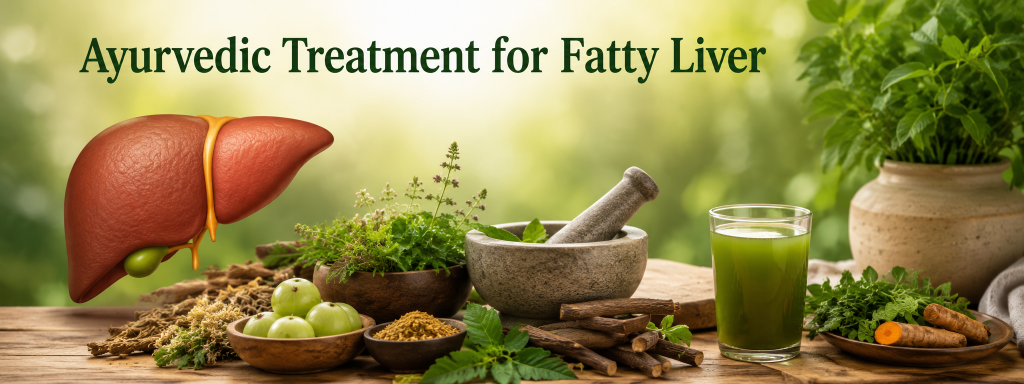
Fatty liver is not simply a number on an ultrasound report. It is a metabolic condition that can affect digestion, hormones, energy levels, skin health, hair health, and mental clarity. This is where ayurvedic treatment for fatty liver focuses on a different approach — addressing the underlying metabolic imbalance rather than only monitoring enzyme levels.
At Bawa’s Centre of Modern Ayurveda — Amritsar’s trusted Ayurvedic clinic for liver conditions — Dr. Arjun Bawa has been treating fatty liver and Liver Cirrhosis patients for more than 12 years using safe, plant-based Ayurvedic protocols designed to target the root cause of the condition and support long-term healing.
What Is Fatty Liver and Why Is It So Common in India?
Fatty liver — medically called Hepatic Steatosis — is a condition where excess fat accumulates in liver cells. When fat makes up more than 5% of the liver’s weight, it is classified as fatty liver disease.
There are two types:
Alcoholic Fatty Liver Disease
caused by excessive alcohol consumption.
Non-Alcoholic Fatty Liver Disease (NAFLD)
the far more common type in India — affecting people who drink little or no alcohol. NAFLD is driven by metabolic dysfunction — insulin resistance, poor diet, sedentary lifestyle, stress, and gut dysbiosis.
India has one of the highest rates of NAFLD in the world — affecting an estimated 9 to 32% of the Indian population. In urban populations with sedentary lifestyles and high refined carbohydrate diets, the prevalence is even higher.
The alarming fact — most patients with Grade 1 or Grade 2 fatty liver have no obvious symptoms for years. By the time symptoms appear, significant metabolic damage has already accumulated.
Fatty Liver Symptoms — What Your Body Is Actually Telling You
Most doctors associate fatty liver only with elevated SGOT and SGPT or an abnormal ultrasound. But fatty liver produces a wide range of symptoms that patients — and often their doctors — do not connect to the liver:
Digestive Symptoms
- Bloating and abdominal fullness after meals — especially after fatty or fried food
- Nausea and loss of appetite in the morning
- Constipation alternating with loose stools
- Stomach pain or discomfort in the upper right abdomen
- Excessive gas and belching
Metabolic Symptoms
- Unexplained weight gain — especially around the abdomen
- Difficulty losing weight despite diet and exercise
- Fat accumulation beginning in the abdominal area
- Rising triglycerides and cholesterol in blood reports
- Crystal formation in urine or gallbladder
Energy and Neurological Symptoms
- Persistent fatigue that sleep does not resolve
- Brain fog — difficulty concentrating and remembering
- Headaches that come and go without clear cause
- Heaviness in the head — foggy, heavy feeling
- Low mood and irritability without obvious reason
Hormonal Symptoms
- Hair fall and thinning — especially in women
- Skin dryness despite adequate hydration
- Vitamin B12 deficiency — damaged liver cells release B12 poorly
- BP imbalance — low BP in women, rising BP in men
- Palpitations and increased heart rate
Why Does Conventional Treatment for Fatty Liver Fail?
Weight loss advice without metabolic correction does not work. Most fatty liver patients have insulin resistance — a metabolic condition that makes weight loss extremely difficult regardless of calorie restriction. Without correcting insulin resistance at the root level, diet and exercise alone produce minimal results.
SGOT and SGPT suppression is not treatment. Some doctors prescribe supplements like silymarin or UDCA to reduce liver enzyme numbers. These reduce the inflammation signal but do not address the fat accumulation or metabolic dysfunction driving it.
No medicine addresses fat accumulation directly. Conventional medicine has no approved drug that effectively reverses NAFLD. The only recognized treatment is lifestyle modification — which most patients struggle to implement consistently without metabolic support.
The result is what millions of Indian patients experience — fatty liver that stays at Grade 1 or 2 for years, occasionally progressing to Grade 3, and eventually to NASH or Liver Cirrhosis.
How Ayurveda Understands Fatty Liver?
In Ayurveda, fatty liver is understood as a condition primarily driven by aggravated Pitta and Kapha Doshas combined with Ama accumulation — the result of impaired Agni or digestive fire.
Pitta aggravation produces liver inflammation, heat in the blood, and disruption of the liver’s detoxification functions. This corresponds directly to elevated SGOT, SGPT, and the inflammatory component of NAFLD.
Kapha aggravation produces heaviness, congestion, fat accumulation, and metabolic sluggishness. This corresponds to fat deposition in liver cells, weight gain, and metabolic syndrome.
Ama accumulation in the liver channels (Yakrit Srotas) blocks normal liver function, impairs fat metabolism, and creates the toxic environment that promotes progressive liver damage.
Mandagni — weakened digestive fire — is the foundational cause. When Agni is impaired, food is not properly metabolized, Ama accumulates, and Doshas become progressively imbalanced.
Ayurvedic treatment for fatty liver works on four levels simultaneously:
- Reducing Pitta — clearing liver inflammation through hepatoprotective herbs and anti-inflammatory dietary modifications
- Correcting Kapha — improving fat metabolism and restoring lightness through specific herbs and dietary protocols
- Clearing Ama — removing metabolic toxins from liver channels through Panchakarma and herbal formulations
- Strengthening Agni — restoring digestive fire so food is properly metabolized and Ama stops accumulating
Ayurvedic Herbs That Treat Fatty Liver — Clinically
Bhumi Amla (Phyllanthus niruri)
One of the most well-researched hepatoprotective herbs in Ayurveda. Has documented activity against hepatic inflammation, reduces elevated SGOT and SGPT levels, inhibits hepatic fat accumulation, and supports liver cell regeneration.
Kutki (Picrorhiza kurroa)
Considered one of the most potent liver-protective agents in classical Ayurveda. Reduces liver inflammation, improves bile flow, has antioxidant properties that protect liver cells from oxidative damage.
Punarnava (Boerhavia diffusa)
Reduces fluid retention, supports liver detoxification, has documented anti-inflammatory properties, and helps reduce abdominal heaviness and bloating.
Triphala
Has documented effects on gut microbiome health, metabolic function, and liver enzyme normalization. Corrects gut dysbiosis that drives systemic inflammation.
Guduchi (Tinospora cordifolia)
Powerful immunomodulator and anti-inflammatory herb with documented hepatoprotective properties. Reduces liver inflammation and supports immune function.
Arogyavardhini Vati
Classical Ayurvedic compound formulation specifically indicated for liver conditions including fatty liver, elevated liver enzymes, and metabolic disorders.
Important: These herbs must be prescribed in the correct combination and dosage for your specific condition, current liver enzyme levels, and metabolic profile. They should never be self-prescribed.
The Role of Diet in Reversing Fatty Liver
Foods that worsen fatty liver — eliminate or significantly reduce:
- Refined sugar and sugary drinks — directly promote hepatic fat synthesis
- Maida and refined carbohydrates — cause insulin spikes that drive fat accumulation
- Fried and deep-fried foods — increase hepatic inflammatory load
- Processed and packaged foods — contain trans fats that damage liver cells
- Excess dairy — especially cold milk and heavy cream — increases Kapha and Ama
- Alcohol — even small amounts accelerate fatty liver progression
- Late night eating — eating after 8 PM directly impairs liver’s overnight metabolic work
Foods that support liver healing:
- Bitter vegetables — karela, methi leaves, drumstick — stimulate bile flow
- Warm water with lemon in the morning — gentle liver stimulation and Ama clearance
- Turmeric — curcumin has documented anti-inflammatory and hepatoprotective properties
- Garlic — supports glutathione production, the liver’s primary antioxidant
- Green leafy vegetables — provide folate and micronutrients essential for liver metabolism
- Buttermilk — light, easily digestible dairy that supports gut health
- Pomegranate — reduces oxidative stress and liver inflammation
Meal timing — critical and often overlooked:
Eat your largest meal at lunch between 12 PM and 2 PM when digestive fire is strongest. Keep dinner light and eat before 7:30 PM. Never skip breakfast. These timing adjustments alone produce significant improvement in metabolic function within 4 to 6 weeks.
Panchakarma Therapies for Fatty Liver
For patients with Grade 2 or Grade 3 fatty liver, Panchakarma therapies provide a depth of detoxification that medicines and diet alone cannot achieve:
Virechana (Therapeutic Purgation)
The most important Panchakarma procedure for liver conditions. Specifically targets Pitta and clears accumulated Ama from the liver and gastrointestinal tract. Clinical experience shows significant improvement in SGOT, SGPT, and abdominal symptoms after properly administered Virechana.
Abhyanga followed by Swedana
Preparatory procedures that mobilize deep-seated Ama from tissues. Abhyanga with specific medicated oils improves circulation and begins the detoxification process. Swedana opens channels and promotes toxin elimination through sweat.
Basti (Medicated Enema)
For patients with metabolic syndrome and fatty liver combined with constipation and Vata imbalance, Basti helps restore normal gut function and reduces systemic inflammatory burden.
These therapies are performed at our Panchakarma centre under expert supervision after a detailed assessment of your condition.
These procedures are performed at Bawa’s Centre of Modern Ayurveda under Dr. Arjun Bawa’s direct supervision following a thorough clinical assessment. They are medically indicated therapeutic procedures — not spa treatments.
What Results Can Fatty Liver Patients Expect?
Grade 1 Fatty Liver:
Most patients see normalization of SGOT and SGPT within 2 to 3 months. Ultrasound improvement to normal liver echogenicity within 4 to 6 months. Significant improvement in digestive symptoms, energy, and associated complaints within 6 to 8 weeks.
Grade 2 Fatty Liver:
Meaningful improvement in liver enzyme levels within 3 to 4 months. Ultrasound grade reduction within 6 to 9 months with consistent treatment and dietary compliance.
Grade 3 Fatty Liver or NASH:
Treatment focuses on preventing progression to Liver Cirrhosis, reducing inflammation, and improving liver function parameters. Meaningful improvement in quality of life and liver function tests is achievable with consistent treatment.
Key factors affecting results:
- Dietary compliance — the single biggest factor
- Whether alcohol consumption is stopped completely
- How consistently Ayurvedic medicines are taken
- Whether meal timing corrections are implemented
- Stress management and sleep quality
Fatty Liver and Its Connection to Other Chronic Conditions
Fatty Liver and Diabetes
Insulin resistance is both a cause and consequence of fatty liver. Ayurvedic treatment that addresses metabolic dysfunction benefits both conditions simultaneously. Patients with insulin resistance and diabetes may also benefit from Ayurvedic treatment for Diabetes, as both conditions often share the same metabolic root cause.
Fatty Liver and Kidney Disease
Chronic liver inflammation promotes systemic inflammation that progressively damages kidney function. Patients with both conditions require a treatment approach that protects both organs simultaneously. Patients experiencing combined liver and kidney concerns may require Ayurvedic treatment for Kidney Disease to support both organs simultaneously.
Fatty Liver and Liver Cirrhosis
Untreated Grade 3 fatty liver can progress to NASH and eventually to Liver Cirrhosis. Early intervention is the most effective prevention.
Fatty Liver and Vitamin B12 Deficiency
The liver stores approximately 50% of the body’s total B12 reserves. When liver cells are damaged by fat accumulation, B12 storage is impaired — leading to deficiency that causes fatigue, hair fall, and neurological symptoms.
When Should You Consult an Ayurvedic Doctor for Fatty Liver?
The ideal time to start Ayurvedic treatment is the moment fatty liver is diagnosed — not after it progresses to Grade 3 or NASH.
Consult Dr. Arjun Bawa at Bawa's Centre of Modern Ayurveda if you have:
- Ultrasound showing Grade 1, 2, or 3 fatty liver
- Elevated SGOT and SGPT on blood test
- Persistent bloating, abdominal discomfort, or heaviness
- Unexplained fatigue, hair fall, or skin dryness
- Rising triglycerides and cholesterol
- Vitamin B12 deficiency with liver involvement
- Any combination of the metabolic symptoms described in this article
Conclusion
Fatty liver is one of the most common and most reversible chronic conditions in India today — but only when addressed correctly and early. Generic advice to lose weight and avoid oil produces limited results because it does not address the metabolic root cause driving fat accumulation in liver cells.
Ayurvedic treatment for fatty liver works at the root level — correcting Pitta and Kapha imbalance, clearing Ama from liver channels, restoring Agni, and supporting liver cell regeneration through clinically validated hepatoprotective herbs and targeted Panchakarma procedures.
The earlier you start, the faster the reversal. If your reports show fatty liver — do not wait for it to progress. Book a consultation with Dr. Arjun Bawa at Bawa’s Centre of Modern Ayurveda, Amritsar today.
Book Your Consultation for Fatty Liver Treatment
Dr. Arjun Bawa — BAMS, MSc Psychology, C.C.C.M. | 12+ Years Experience
Bawa’s Centre of Modern Ayurveda, Amritsar
📍 13-B, Kashmir Avenue, Batala Road, Amritsar
📞 +91 83609 86081 | +91 78885 79180
🌐 ayuvacare.com/consultation/
In-clinic and online consultations available.
Patients from Ludhiana, Jalandhar, Chandigarh and abroad welcome.