
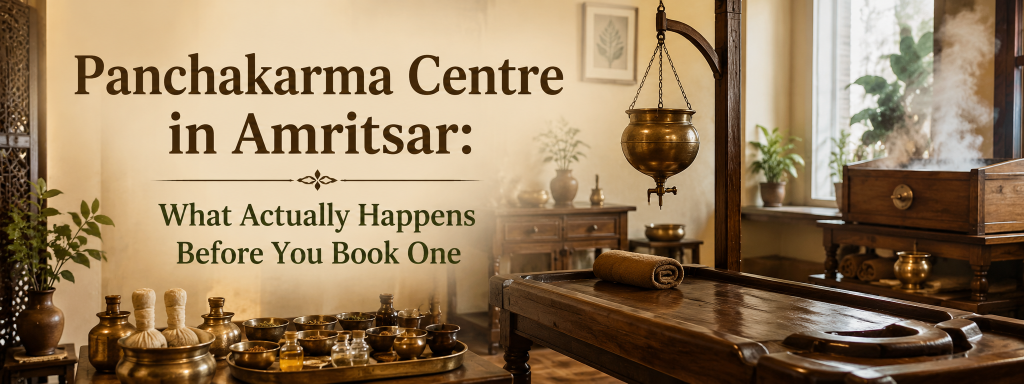
Most people search for a *Panchakarma centre in Amritsar* after they have already tried everything else — supplements, painkillers, diet apps, maybe a physiotherapist. The fatigue is still there. The digestion is still off. Sleep still feels shallow. That is usually the point where someone first types “Panchakarma near me” into Google, not really knowing what they are about to book.
This guide explains, in plain language, what a genuine Panchakarma centre in Amritsar actually offers, how the process works, and how to tell a serious clinical program apart from a one-hour spa massage wearing the same name.
What Does a Real Panchakarma Centre in Amritsar Actually Offer?
Panchakarma is not a single treatment — it is a structured, multi-day program built around five core cleansing procedures: Vamana, Virechana, Basti, Nasya, and Raktamokshana. Each one targets a different channel of elimination in the body, and each is chosen based on which dosha (Vata, Pitta, or Kapha) is out of balance.
A proper Panchakarma centre in Amritsar will always begin with a detailed consultation, not a straight walk-in massage. The doctor checks pulse, digestion pattern, sleep, stress levels, and any existing conditions before deciding which of the five procedures — and in what sequence — actually apply to you. This is the biggest difference between a clinical Panchakarma program and a generic “Ayurvedic massage” package: one is diagnosed, the other is a fixed menu.
Signs Your Body Is Asking for Panchakarma
You don’t need a chronic diagnosis to benefit from Panchakarma. Some of the most common signs patients mention during their first visit include:
– Constant tiredness that doesn’t improve with sleep
– Bloating, irregular digestion, or a heavy feeling after meals
– Joint stiffness or body pain that “moves around”
– A foggy, unfocused mind, even on light workdays
– Skin dullness or frequent minor infections
– Stress that has started to show up as physical symptoms
None of these are dramatic on their own. That is exactly why they get ignored for years — until they compound into something bigger, which is where Panchakarma is most effective: catching imbalance early, before it becomes disease.
The Five Procedures, in Plain Language
Vamana
a supervised, medicated therapeutic emesis, used mainly for Kapha-related congestion and skin conditions.
Virechana
a controlled purgation therapy that clears excess Pitta from the digestive tract.
Basti
medicated enemas, considered the most important of the five, especially for Vata-related joint and nerve conditions.
Nasya
nasal administration of medicated oils, used for sinus, headache, and Kapha-related head conditions.
Raktamokshana
controlled blood-letting therapy, used selectively for specific skin and blood-related conditions.
Every genuine Panchakarma centre in Amritsar builds a personalised plan from these five — never all five for every patient. If a clinic offers the “same package” to everyone who walks in, that is a sign it is being run as a spa service rather than a medical one.
What a Week at a Genuine Panchakarma Centre in Amritsar Looks Like?
A typical Panchakarma program runs anywhere from 7 to 21 days, structured in three phases:
Purva Karma (Preparation)
Snehana (internal and external oleation with medicated oils/ghee) and Swedana (herbal steam therapy) to loosen toxins and prepare the body’s channels.
Pradhana Karma (Main Procedure)
the specific therapy assigned to you — Vamana, Virechana, Basti, or Nasya — carried out under direct medical supervision.
Paschat Karma (Recovery)
a structured diet and lifestyle routine (Samsarjana Krama) that rebuilds digestive strength gradually, so the results actually hold.
Patients who skip the third phase — going straight back to regular food and stress the next day — are the ones who see the benefits fade fastest. A serious centre will always walk you through this recovery period, not just the treatment days.
Who Should and Shouldn't Start Panchakarma Right Away?
Panchakarma is genuinely helpful for chronic digestive issues, joint and lifestyle disorders, stress-related conditions, skin conditions, and general seasonal detox. It is not something to self-prescribe, though. Pregnant women, people recovering from major surgery, and patients with certain acute conditions need a doctor’s clearance first — which is exactly why the initial consultation matters more than the treatment menu. According to the Directorate of AYUSH Panchakarma should be approached as a supervised medical process, not a home remedy, and this is the standard every credible centre should follow.
If you have already been considering Ayurvedic massage in Amritsar for stress or muscular tension, it is worth knowing that massage (Abhyanga) is only the preparatory phase of Panchakarma — a good first step, but not the same as a complete detox protocol.
Why Patients Choose Ayuvacare as Their Panchakarma Centre in Amritsar?
Ayuvacare — Bawa’s Centre of Modern Ayurveda — designs every Panchakarma program around an individual diagnosis rather than a fixed package. Treatment plans are built after a proper consultation, supervised throughout by an experienced Ayurvedic doctor, and followed up with clear post-treatment diet guidance so results are sustained, not temporary.
For patients already managing chronic conditions — kidney, liver, or diabetes-related concerns — this matters even more, since Panchakarma protocols have to be adjusted carefully around existing treatment, not applied as a one-size-fits-all detox.
Ready to Start?
If you have been feeling “off” for a while and are looking for a genuine, doctor-led Panchakarma centre in Amritsar rather than a generic spa package, the right first step is a proper consultation — not a treatment booking.