PCOD in Women: Symptoms, Care & Ayurvedic Perspective

PCOD in women is becoming increasingly common in today’s fast-paced lifestyle. Many women experience irregular periods, weight changes, mood fluctuations, or skin concerns without fully understanding the root cause. Polycystic Ovarian Disease (PCOD) is often linked to hormonal imbalance, but it is more than just a hormonal issue.

From an Ayurvedic perspective, PCOD in women is viewed as a reflection of internal imbalance influenced by digestion, stress, lifestyle patterns, and metabolic rhythm. Instead of focusing only on symptoms, Ayurveda aims to understand the whole person and restore balance gradually and naturally.

This article aims to create awareness about PCOD symptoms, lifestyle care, and how Ayurveda offers a supportive and holistic path.

What Is PCOD in Women?

PCOD (Polycystic Ovarian Disease) is a condition where hormonal imbalance affects ovarian function. It may lead to irregular menstrual cycles and other related symptoms.

Modern lifestyle factors such as stress, irregular eating habits, lack of physical activity, and disturbed sleep patterns contribute significantly to this condition. PCOD in women is often not caused by one single factor but by a combination of long-term imbalances.

Ayurveda does not view PCOD as just an ovarian condition. Instead, it looks at the connection between digestion, metabolism, emotional health, and daily routine.

Common PCOD Symptoms in Women
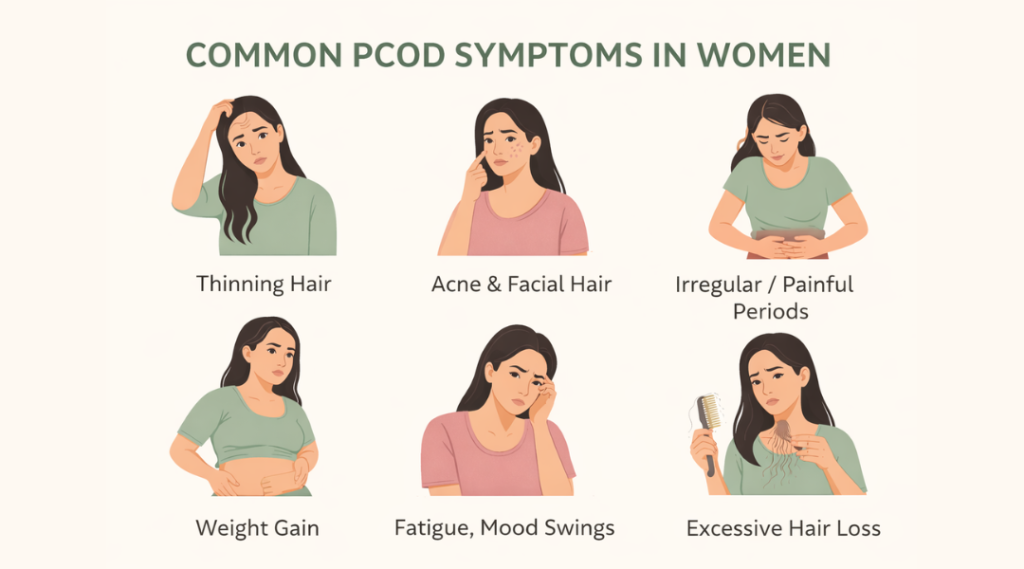
Symptoms may vary from one person to another. Some common signs include:
 
•Irregular or delayed menstrual cycles
•Weight gain, especially around the abdomen
•Acne or oily skin
•Hair thinning or unwanted hair growth
•Mood swings
•Fatigue
•Difficulty maintaining metabolic balance
 
Not every woman will experience all symptoms. Early awareness helps in better management and long-term care.
common pcod symptoms in women

Why Is PCOD Increasing Today?

The rise in PCOD cases can be linked to modern habits such as:
 
•Skipping meals or eating processed food
•Sedentary work routine
•High stress levels
•Lack of proper sleep
•Excessive screen time
•Emotional strain
 
These factors disturb metabolic rhythm and internal balance over time.
Ayurveda emphasises that when digestion and daily routine are not aligned with natural body rhythms, hormonal imbalance can gradually develop.

How Ayurveda Understands PCOD ?

In Ayurveda, PCOD in women is often understood as a disturbance in dosha balance, especially Kapha and Vata, combined with weakened digestive fire (Agni).
When digestion becomes sluggish and metabolism is disturbed:
•Toxins may accumulate
•Hormonal rhythm may fluctuate
•Menstrual regularity may be affected
 
Ayurveda therefore focuses on improving digestion, regulating routine, and restoring internal harmony rather than addressing only surface-level symptoms.

Lifestyle Care During PCOD

Lifestyle plays a major role in managing PCOD naturally.

Maintain Regular Meal Timings

Eating at consistent times helps regulate metabolic rhythm.

Prefer Fresh, Home-Cooked Meals

Warm, balanced meals are easier to digest compared to processed foods.

Gentle Physical Activity

Yoga, walking, and light exercises support circulation and metabolism.

Improve Sleep Quality

Sleeping before 11 PM helps support hormonal balance.

Manage Stress

Breathing exercises, meditation, or simple relaxation techniques can support emotional balance.

Small, consistent changes often create long-term improvement.

Benefits of Choosing Ayurveda for PCOD Support

There are several approaches available for PCOD management. However, many women explore Ayurveda because of its holistic philosophy.
Some benefits of choosing Ayurveda include:
•Focus on root cause rather than symptom suppression
•Personalised lifestyle guidance
•Dietary awareness and digestive correction
•Emphasis on long-term balance
•Gradual and sustainable improvement
•Support for emotional and mental wellbeing
 
Ayurveda does not follow a one-size-fits-all method. Each woman’s body nature and lifestyle are considered before guidance is given.

Role of Personalised Consultation

PCOD affects every woman differently. Therefore, personalised consultation is important.
 
An experienced Ayurvedic doctor evaluates:
•Menstrual pattern
•Digestive health
•Body constitution (Prakriti)
•Stress levels
•Daily routine
•Metabolic tendencies
 
Based on this understanding, individualised guidance is provided.
 
At Ayuvacare, Dr. Arjun Bawa follows a holistic and patient-focused approach. With years of clinical experience and a deep understanding of both modern diagnostics and classical Ayurveda, he guides women through personalised wellness strategies designed to restore balance gently and effectively.
 
Women looking for personalised wellness support can consult Dr. Arjun Bawa for Ayurvedic guidance to understand their body constitution and lifestyle needs better.
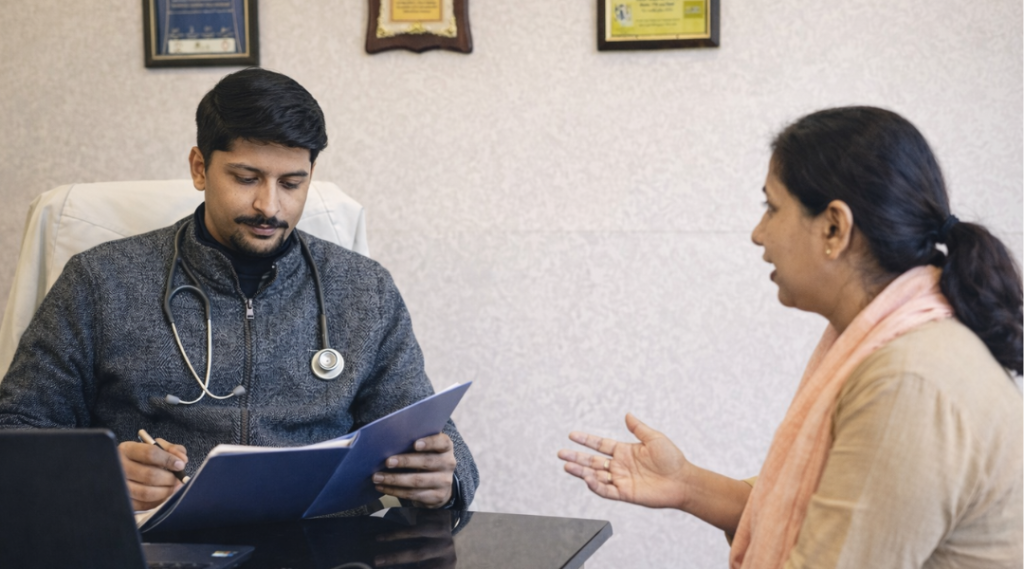
Ayurvedic doctor reviewing patient records while listening during a calm consultation

When Should You Seek Guidance for PCOD?

It may be helpful to consult a professional if:
•Period irregularity continues for several months
•Symptoms worsen over time
•You feel constant fatigue or mood instability
•Lifestyle changes alone are not helping
 
Early guidance often prevents long-term complications.

PCOD and Emotional Wellbeing

PCOD is not only physical. Many women experience emotional stress due to hormonal fluctuations.

Ayurveda recognises the mind-body connection. Emotional stability, positive routine, and mental calmness are considered equally important in supporting balance.

This holistic understanding makes Ayurveda different from symptom-focused approaches.

Long-Term Approach Matters

PCOD is usually a long-term condition influenced by lifestyle patterns. Quick fixes may not provide lasting results.
Ayurveda encourages gradual improvement through:
•Routine alignment
•Digestive strengthening
•Seasonal balance
•Consistent lifestyle correction
 
This steady approach often builds confidence and self-awareness.

Final Thoughts

PCOD in women is becoming common, but awareness and timely lifestyle care can make a meaningful difference. Understanding symptoms early, maintaining routine, and seeking personalised guidance are important steps.

Ayurveda offers a balanced, root-focused, and individualised path that supports hormonal harmony naturally. Under the guidance of an experienced Ayurvedic doctor like Dr. Arjun Bawa, women can move toward better clarity, confidence, and long-term wellness.

If you are experiencing symptoms of PCOD or want to understand your body better, consider exploring Ayurvedic consultation for a thoughtful and personalised approach.

Leave a Comment

Your email address will not be published. Required fields are marked *