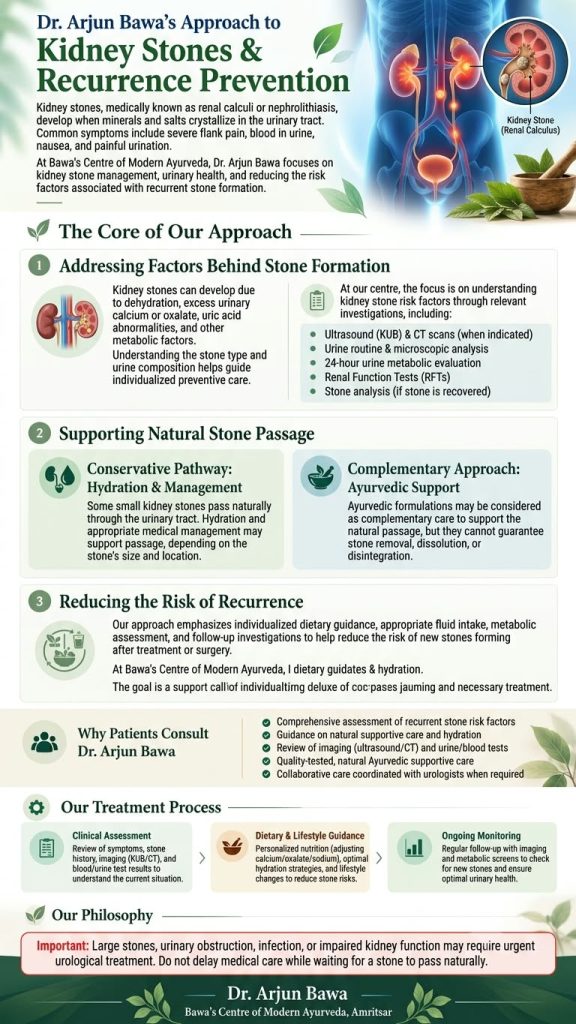
Kidney Stones & Recurrence Prevention
Dr. Arjun Bawa’s Approach to Kidney Stone Management
Kidney stones, medically known as renal calculi or nephrolithiasis, develop when minerals and salts crystallize in the urinary tract. They may cause severe flank pain, blood in the urine, nausea, vomiting, and painful urination. Understanding the underlying causes and individual risk factors is an important step toward appropriate treatment and recurrence prevention.
At Bawa’s Centre of Modern Ayurveda, Amritsar, Dr. Arjun Bawa emphasizes individualized assessment, dietary guidance, hydration management, and complementary Ayurvedic support as part of a comprehensive approach to kidney stone care.
Understanding the Factors Behind Kidney Stone Formation
Kidney stones may develop due to dehydration, concentrated urine, excess calcium or oxalate, uric acid abnormalities, and other metabolic factors. The appropriate management strategy depends on the stone’s size, location, composition, associated symptoms, and the patient’s overall kidney health.
A comprehensive assessment may include:
Ultrasound or CT scans when clinically indicated.
Urine routine examination and microscopic analysis.
Twenty-four-hour urine metabolic evaluation for selected patients.
Renal function tests.
Stone composition analysis when a stone is recovered.
These investigations help healthcare professionals assess the condition and determine the most suitable treatment plan.
Supporting Natural Stone Passage
Hydration and Conservative Management
Some small kidney stones can pass naturally through the urinary tract. Adequate fluid intake, appropriate pain management, and medical monitoring may support natural passage in suitable cases.
The recommended approach depends on the stone’s size and location, the presence of urinary obstruction, kidney function, and other clinical factors. Not every kidney stone can pass without intervention.
Complementary Ayurvedic Support
Ayurvedic formulations may be considered as complementary support following an appropriate medical assessment. Their suitability depends on the individual’s condition, the ingredients used, and potential interactions with other treatments.
Ayurvedic treatment should not be presented as a guaranteed method of stone dissolution or removal. Patients should consult a qualified healthcare professional before using herbal preparations, particularly if they have impaired kidney function or take prescription medicines.
Reducing the Risk of Recurrence
Kidney stones can recur, making prevention an important part of long-term care. A personalized prevention plan may include:
Individualized hydration guidance: Maintaining adequate fluid intake according to medical advice and individual health needs.
Dietary modifications: Adjusting sodium, oxalate, calcium, animal protein, or other dietary components according to the stone type and metabolic findings.
Metabolic assessment: Identifying relevant risk factors that may contribute to repeated stone formation.
Follow-up monitoring: Reviewing symptoms, imaging findings, urine tests, and kidney function when indicated.
Coordinated medical care: Working with a urologist or nephrologist when specialist evaluation is necessary.
The objective is to reduce preventable risk factors, support kidney health, and help patients make informed decisions about ongoing care.
Why Consult Dr. Arjun Bawa?
At Bawa’s Centre of Modern Ayurveda, the approach focuses on understanding each patient’s condition and developing an individualized care plan.
Patients may receive guidance on:
Assessment of kidney stone history and recurrence risk factors.
Review of available imaging reports and laboratory investigations.
Personalized dietary and hydration recommendations.
Discussion of appropriate complementary Ayurvedic support.
Follow-up planning and coordination with urological specialists when required.
Every patient’s condition is different. Treatment recommendations should be based on an appropriate clinical assessment rather than a one-size-fits-all approach.
Our Treatment Process
1. Clinical Assessment
Review symptoms, medical history, previous stone episodes, imaging reports, urine tests, and kidney function resu