Dust Allergy Treatment and Supportive Ayurvedic Care
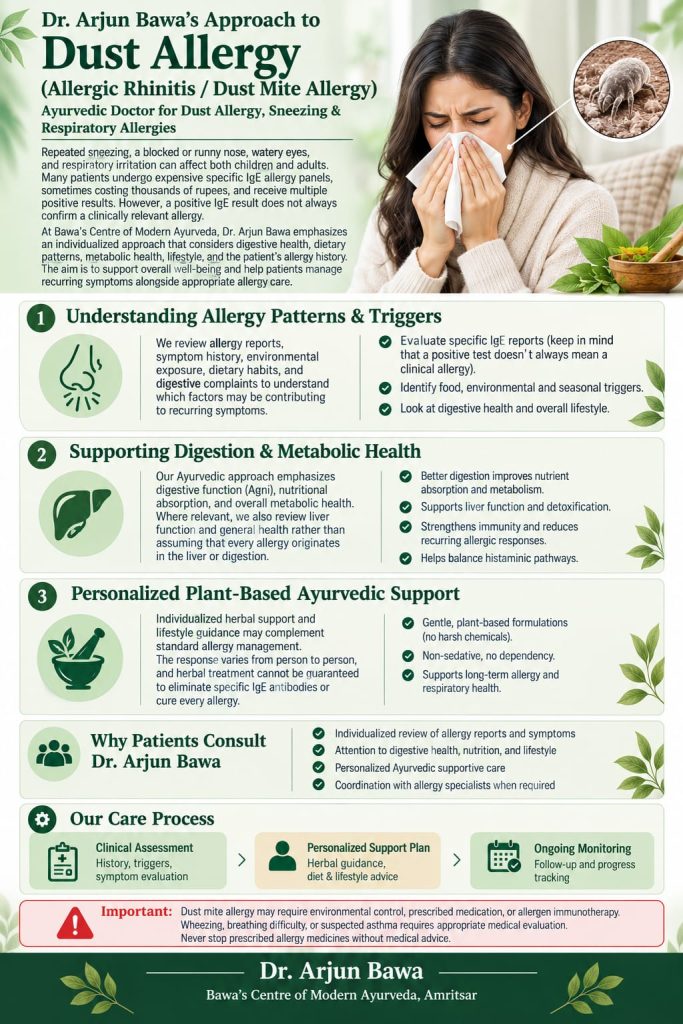
Dr. Arjun Bawa’s Approach to Dust Allergy
Allergic Rhinitis, Dust Mite Allergy, Sneezing and Respiratory Allergies
Dust allergy can cause repeated sneezing, a runny or blocked nose, watery eyes, nasal irritation and other respiratory symptoms. Dust mite allergy is one possible cause, although similar symptoms may occur due to pollen, mould, pet allergens or other environmental triggers.
At Bawa’s Centre of Modern Ayurveda, Dr. Arjun Bawa emphasizes an individualized approach that considers allergy history, environmental exposure, dietary habits, lifestyle and existing medical treatment. The aim is to support overall well-being and help patients explore appropriate ways to manage recurring symptoms.
1. Understanding Allergy Patterns and Triggers
Effective allergy management begins with understanding the symptoms and identifying possible triggers. A detailed assessment can help guide appropriate care and determine whether further medical evaluation is needed.
Our assessment approach may include:
Reviewing allergy reports, symptoms and relevant medical history.
Discussing environmental, seasonal and household triggers.
Reviewing dietary habits, sleep patterns and lifestyle factors.
Considering specific IgE blood tests or skin-prick testing when recommended by a qualified healthcare professional.
Reviewing digestive concerns where relevant to the patient’s overall health.
A positive allergy test does not always establish that a particular allergen is responsible for the patient’s symptoms. Test results should be interpreted alongside the clinical history.
2. Supporting Digestive and Metabolic Health
Nutrition and general health are important considerations in an individualized wellness plan. Ayurvedic consultations may include discussions about dietary routines, digestive comfort, hydration and sustainable lifestyle practices.
Our supportive approach may include:
Reviewing eating habits and nutritional balance.
Discussing digestive symptoms and individual food sensitivities.
Encouraging appropriate hydration and regular meal routines.
Considering general metabolic health and healthy lifestyle habits.
Reviewing supplements or herbal preparations for safety and possible interactions with prescribed medicines.
Dust mite allergy is an immune-mediated condition and should not be assumed to originate from digestive problems or impaired liver function. Digestive and metabolic support may contribute to general wellness but is not a proven cure for allergic rhinitis.
3. Personalized Plant-Based Ayurvedic Support
Ayurvedic herbs and other complementary approaches may be considered as part of an individualized wellness plan after reviewing the patient’s symptoms, medical history and existing treatment.
Our approach emphasizes:
Individualized discussions about suitable complementary care.
Careful review of herbal product ingredients and quality.
Consideration of potential side effects and medicine interactions.
Guidance that takes the patient’s preferences and health needs into account.
Coordination with qualified medical professionals when necessary.
The safety and effectiveness of herbal products vary, and evidence supporting their use for dust mite allergy is limited. No herbal preparation should be presented as a guaranteed way to eliminate allergies or replace evidence-based treatment.
Why Patients Consult Dr. Arjun Bawa
At Bawa’s Centre of Modern Ayurveda, we focus on understanding each patient’s concerns and discussing suitable supportive care options.
Our approach includes:
Individualized review of symptoms, allergy reports and medical history.
Attention to nutrition, lifestyle and general well-being.
Discussion of complementary Ayurvedic care and its limitations.
Guidance on the responsible use of herbal preparations.
Coordination with allergy specialists or other qualified healthcare professionals when required.
Our priority is to help patients make informed decisions about their health while respecting the importance of appropriate medical diagnosis and treatment.
Our Care Process
Step 1: Clinical Assessment
We review the patient’s symptoms, medical history, potential triggers, allergy reports and current medicines. Further testing or specialist evaluation may be recommended when appropriate.
Step 2: Personalized Support Plan
Based on the assessment, we discuss suitable lifestyle measures, dietary guidance and complementary wellness options. Recommendations are individualized and are intended to complement appropriate medical care.
Step 3: Ongoing Monitoring
Follow-up consultations can help review symptom patterns, changes in environmental exposure and the suitability of the supportive care plan. Persistent or worsening symptoms may require further medical evaluation.
Important Medical Information
Dust mite allergy management may involve reducing exposure to dust mites, prescribed medicines or allergen immunotherapy under the supervision of a qualified healthcare professional.
Never stop or change prescribed allergy medication without medical advice. Consult your clinician before starting Ayurvedic herbs, supplements or other complementary treatments.
Seek urgent medical attention if you experience significant difficulty breathing or symptoms of a severe allergic reaction.
Book a Consultation
If you experience recurring sneezing, nasal congestion, watery eyes or dust-related discomfort, a consultation may help you discuss your symptoms and understand suitable supportive care options.
Contact Dr. Arjun Bawa at Bawa’s Centre of Modern Ayurveda, Amritsar, to discuss your concerns and explore an individualized wellness approach alongside appropriate medical treatment.
Medical Disclaimer: This content is for general educational purposes only and does not replace professional medical advice, diagnosis or treatment. Individual results may vary. Always consult a qualified healthcare professional for the diagnosis and management of allergy-related conditions.
Dr. Arjun Bawa
Bawa’s Centre of Modern Ayurveda
Amritsar, Punjab, India