


Introduction: Small Habits, Big Impact
Daily habits affecting kidney health often go unnoticed in everyday life. From irregular hydration to poor sleep routines, small lifestyle choices can gradually impact how your kidneys function. Understanding these daily habits affecting kidney health helps you make simple changes that support long-term balance and overall well-being.
Why Daily Habits Affecting Kidney Health Matter?
Your kidneys work continuously to filter waste and maintain fluid balance.
When daily habits are not aligned with your body’s needs, it can create stress on this system. Over time, this imbalance may reflect in subtle symptoms.
The good news is that simple, consistent changes can support better functioning and overall well-being.

Ignoring Proper Hydration
What Happens?
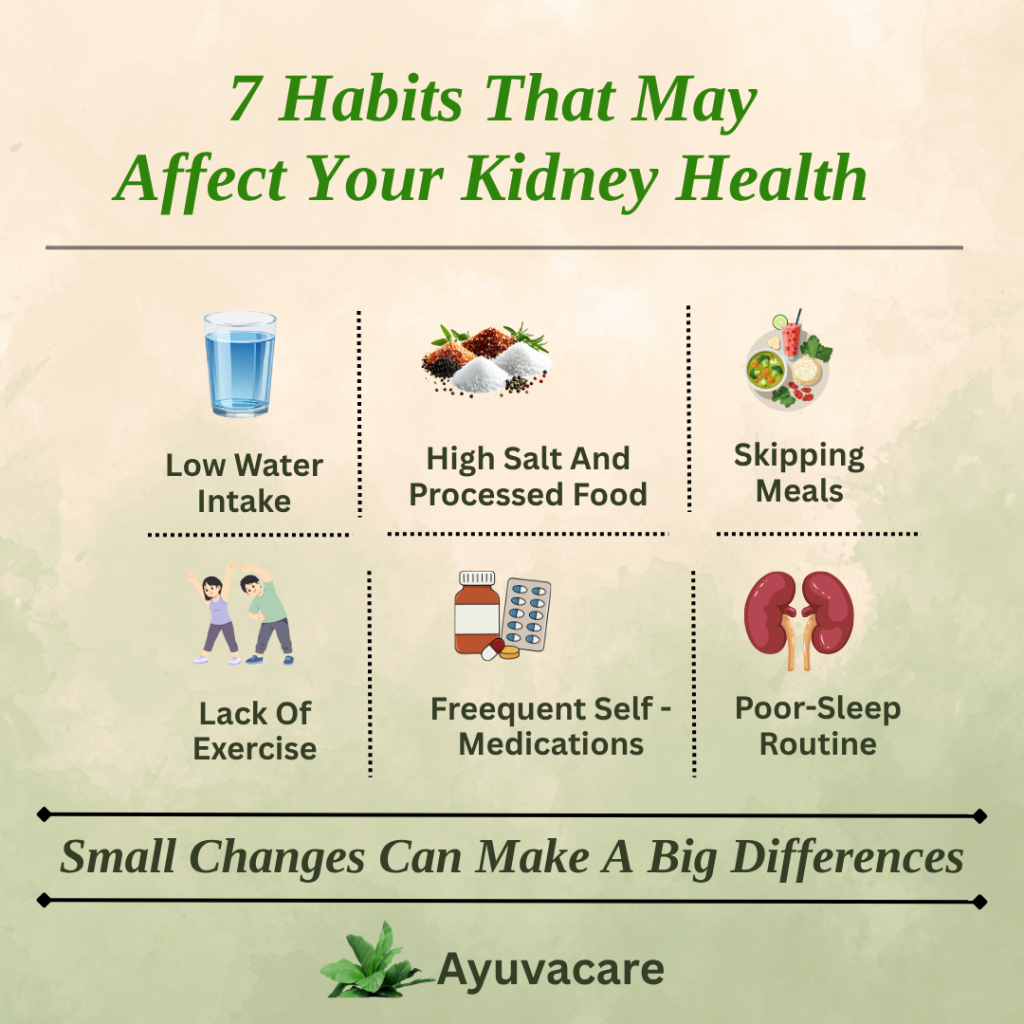
Many people either drink too little water or consume fluids irregularly throughout the day.
This can affect the body’s natural ability to flush out waste effectively.
What You Can Do Instead?
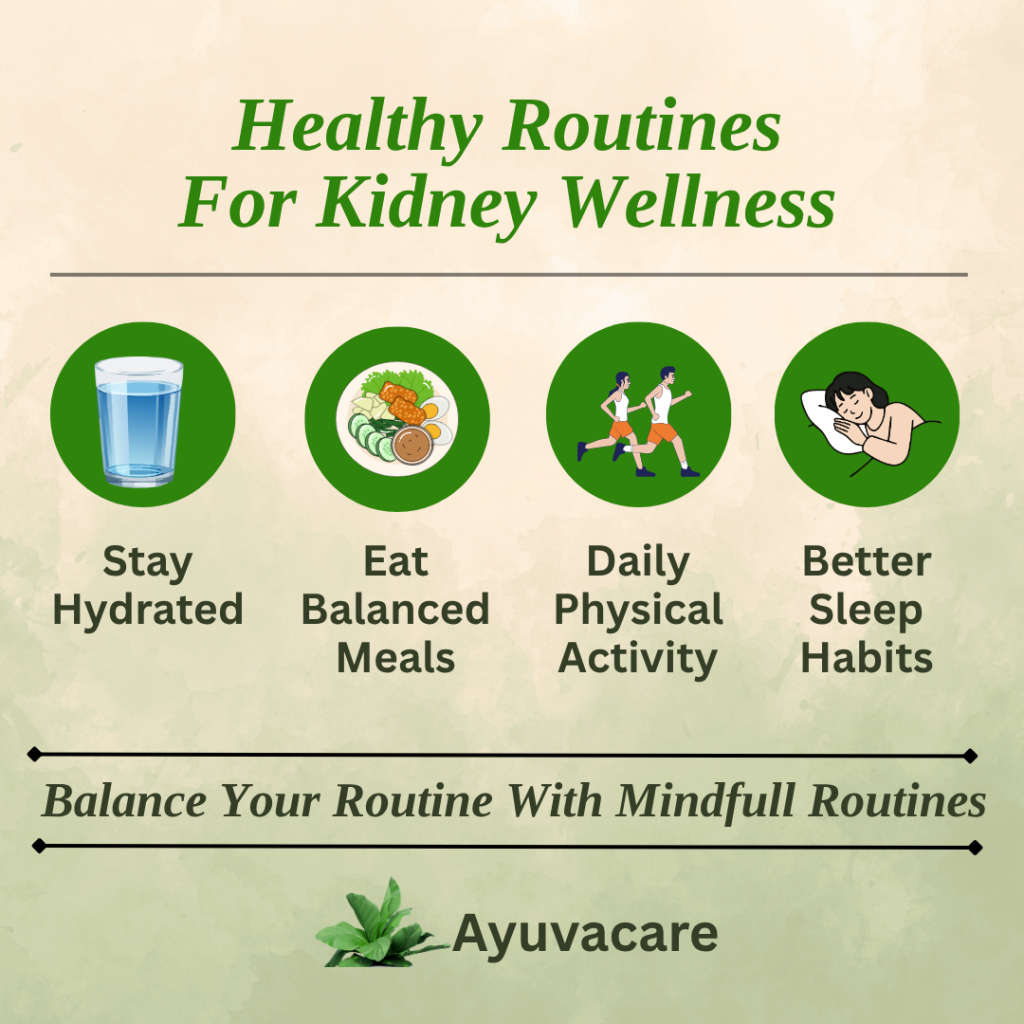
- Drink water at regular intervals
- Avoid waiting until extreme thirst
- Adjust intake based on weather and activity
Balanced hydration supports natural detoxification processes.
Consuming Excess Salt Daily
Why It Matters?
High salt intake can disturb fluid balance in the body.
This may indirectly affect how efficiently the kidneys function.
Simple Changes to Make
- Reduce packaged and processed foods
- Avoid adding extra salt to meals
- Choose fresh, home-cooked food
Even small reductions can make a noticeable difference.
Skipping Meals or Eating Irregularly
The Problem
Irregular eating patterns can impact digestion and metabolism.
This imbalance can affect overall internal harmony.
Better Approach
- Eat meals at fixed times
- Avoid long gaps between meals
- Focus on light and balanced food
Consistency in eating supports better body rhythm.
Lack of Physical Activity
What Happens?
A sedentary lifestyle can slow down metabolism.
It may also affect circulation and overall body functioning.
What You Can Do?
- Include daily walking
- Add light exercise or yoga
- Stay active throughout the day
Movement supports multiple systems, including kidney health.
Taking Frequent Unsupervised Medication
Why This Is Risky?
Self-medication or overuse of certain medicines can put extra load on internal systems.
Many people take medicines casually without understanding long-term impact.
Safer Practice
- Avoid unnecessary medication
- Consult a qualified practitioner
- Follow proper dosage guidelines
Responsible use of medicines is important for long-term wellness.
Poor Sleep Routine
The Hidden Impact
Sleep is essential for repair and balance.
Irregular sleep patterns can disturb internal processes.
Improve Your Sleep
- Maintain a fixed sleep schedule
- Reduce screen time before bed
- Create a calm sleep environment
Good sleep supports overall body function.
Ignoring Early Warning Signs
Common Mistake
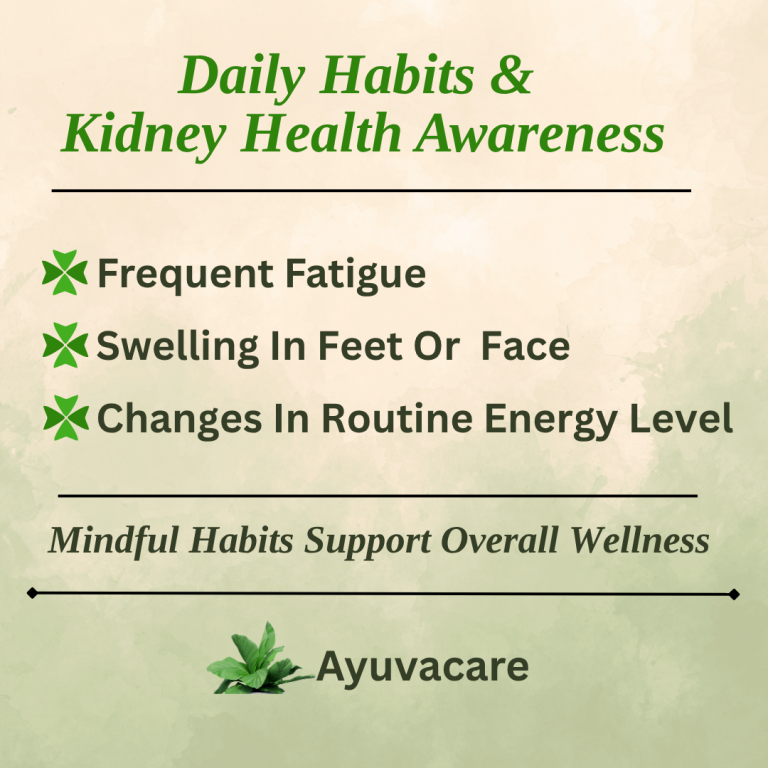
Many people overlook symptoms like:
- Fatigue
- Swelling
- Changes in urination
They assume these are temporary issues.
What You Should Do?
- Pay attention to recurring symptoms
- Monitor your body’s signals
- Seek guidance when needed
Early awareness can help you take timely action.
How Ayurveda Views Daily Habits and Kidney Health?
Ayurveda focuses on balance in daily life.
It emphasizes that consistent routines and mindful habits support overall health.
Key Principles
- Regular daily routine (Dincharya)
- Balanced diet based on body type
- Stress management
- Natural lifestyle practices
This approach supports long-term well-being rather than temporary solutions.
Real-Life Relatability: A Common Scenario
Consider a working professional in India.
Busy schedule, irregular meals, long screen time, and limited physical activity become part of daily life.
Over time, they may notice fatigue or mild swelling but ignore it.
This pattern is very common.
The issue is not one habit, but a combination of small daily choices.
Recognizing this is the first step toward improvement.
Daily Habits Affecting Kidney Health: Simple Routine
Morning
- Start your day with water
- Light stretching or walking
During the Day
- Eat meals on time
- Stay hydrated
- Avoid excessive salt
Evening
- Keep dinner light
- Reduce screen exposure
Night
- Sleep at a consistent time
- Allow proper rest
Consistency is more important than perfection.
Building Awareness Instead of Fear
It is important to understand that these habits do not immediately cause serious problems.
However, over time, they may contribute to imbalance.
The goal is not to create fear, but to encourage awareness and mindful living.
Conclusion: Small Changes Lead to Long-Term Balance
Your daily routine plays a powerful role in your overall health.
By identifying habits that may be affecting your body and making simple adjustments, you can support your system in a natural way.
Kidney health is not just about treatment. It is about consistent care, awareness, and balance in everyday life.
Start with small changes today, and over time, they can lead to meaningful improvements in your well-being.
Call To Action
If you have been noticing changes in your energy levels, routine, or overall well-being, it may be the right time to understand your body more deeply.
At Ayuvacare, we focus on a personalized Ayurvedic approach that considers your lifestyle, habits, and individual health patterns. Our goal is to guide you toward better balance through natural and practical methods.
Book your consultation today and take a step toward a more mindful and balanced health journey.